INTRODUCTION
The Department of Computer Science has always played leading role in academic and extracurricular activities of the university. The department has well equipped laboratories with latest facilities with highly qualified and well trained and experienced, enthusiastic and devoted faculty members. The teaching has been carried out through multimedia along with latest tools and techniques.
MESSAGE FROM THE HEAD OF DEPARTMENT
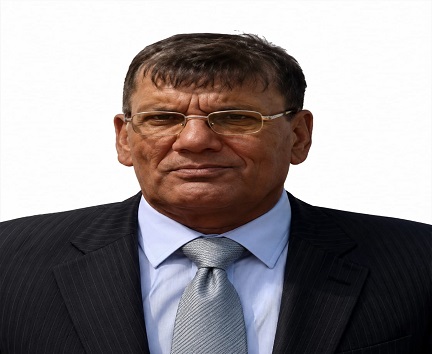
Welcome to the Department of Computer Science at The University of Modern Sciences, Tando Muhammad Khan, Sindh, Pakistan
Computer Science today is not simply a subject to be studied — it is the language in which almost every modern discipline is now written. From artificial intelligence to data-driven decision-making, the skills we teach in this department shape how our graduates will think, build, and lead for decades to come. Our responsibility, as a department, is to make sure that education is rigorous, current, and genuinely useful.
Since its founding, this department has taken that responsibility seriously. We have invested in well-equipped laboratories, brought together a faculty that is not only highly qualified but genuinely devoted to teaching, and built a learning environment where multimedia instruction, group discussion, and hands-on activity work together rather than a classroom where students simply absorb lectures. We believe computer science is best learned by doing, questioning, and building alongside people who care whether you understand it..
Our undergraduate program in Computer Science with Specialization in Artificial Intelligence, and Information Technology are each designed to give students a strong technical foundation while leaving room to specialize in the areas shaping the profession's future. We encourage our students to see themselves not just as job-seekers but as problem-solvers capable of independent learning in a field that will keep changing long after they graduate.
I invite prospective students, parents, and partners to explore what this department has to offer. Whether you are considering joining us, collaborating with us, or simply learning more about our work, I hope you find a department that takes its role in your future as seriously as you do.
THE UNIVERSITY OF MODERN SCIENCES TANDO MUHAMMAD KHAN, SINDH, PAKISTAN
Prof. Asad Ali Shaikh
Head of Department, Computer Science
MISSION
"To provide an inclusive, dynamic learning environment that equips students with a strong theoretical foundation and cutting-edge practical skills. The department commits to advancing technological research, fostering entrepreneurial spirit, and producing ethical, globally competitive professionals who serve industry and society."
VISION
"To become a knowledge and creativity driven Department, excelling in Computer Science education, research, and innovation, and contributing".
CAREER COUNSELLING UMS
For any assistant / help in this regard please email at info@ums.edu.pk our team will contact you.

Academic Programs
PROGRAM OBJECTIVES:
The Program Objectives (POs) of the BS Computer Science program, which describe what graduates are expected to attain within a few years of graduation, were discussed:
PO-1: Apply strong foundations in computing, mathematics, and software development to analyze, design, and implement effective computing solutions across diverse domains.
PO-2: Engage in research, innovation, and continuous lifelong learning to adapt to rapidly evolving technologies.
PO-3: Practice professional ethics, teamwork, and effective communication in multidisciplinary, industrial, and global environments.
PO-4: Contribute to societal and regional development through digital empowerment, inclusion, and sustainable technological solutions.
PO-5: Build successful careers in industry, entrepreneurship, freelancing, or advanced academic study with industry-relevant competencies.
GRADUATE ATTRIBUTES/ PROGRAM LEARNING OBJECTIVES
GA-1 Academic Education: Completion of an accredited program of study designed to prepare graduates as computing professionals.
GA-2 Knowledge for Solving Computing Problems: Apply knowledge of computing fundamentals, knowledge of a computing specialization, and mathematics, science, and domain knowledge appropriate for the computing specialization to the abstraction and conceptualization of computing models from defined problems and requirements.
GA-3 Problem Analysis: Identify and solve complex computing problems, reaching substantiated conclusions using fundamental principles of mathematics, computing sciences, and relevant domain disciplines.
GA-4 Design/Development of Solutions: Design and evaluate solutions for complex computing problems, and design and evaluate systems, components, or processes that meet specified needs.
GA-5 Modern Tool Usage: Create, select, or adapt, and then apply, appropriate techniques, resources, and modern computing tools to complex computing activities, with an understanding of their limitations.
GA-6 Individual and Teamwork: Function effectively as an individual and as a member or leader of a team in multidisciplinary settings.
GA-7 Communication: Communicate effectively with the computing community about complex computing activities by comprehending and writing effective reports and design documentation, making effective presentations, and giving and understanding clear instructions.
GA-8 Computing Professionalism and Society: Understand and assess societal, health, safety, legal, and cultural issues within local and global contexts, and the consequential responsibilities relevant to professional computing practice.
GA-9 Ethics: Understand and commit to professional ethics, responsibilities, and norms of professional computing practice.
GA-10 Life-long Learning: Recognize the need for, and demonstrate the ability to engage in, independent learning for continual development as a computing professional.
Academic Programs
PROGRAM OBJECTIVES:
Academic Programs (Bachelors of Science in Computer Science -04 Years)
BS Computer Science (Generic)
BS Computer Science with Specialization in Artificial Intelligence (BS CS in AI)
BS Computer Science with Specialization in Information Technology (BS CS in IT)